What is this Game | Learn Spanish Through Guessing Games
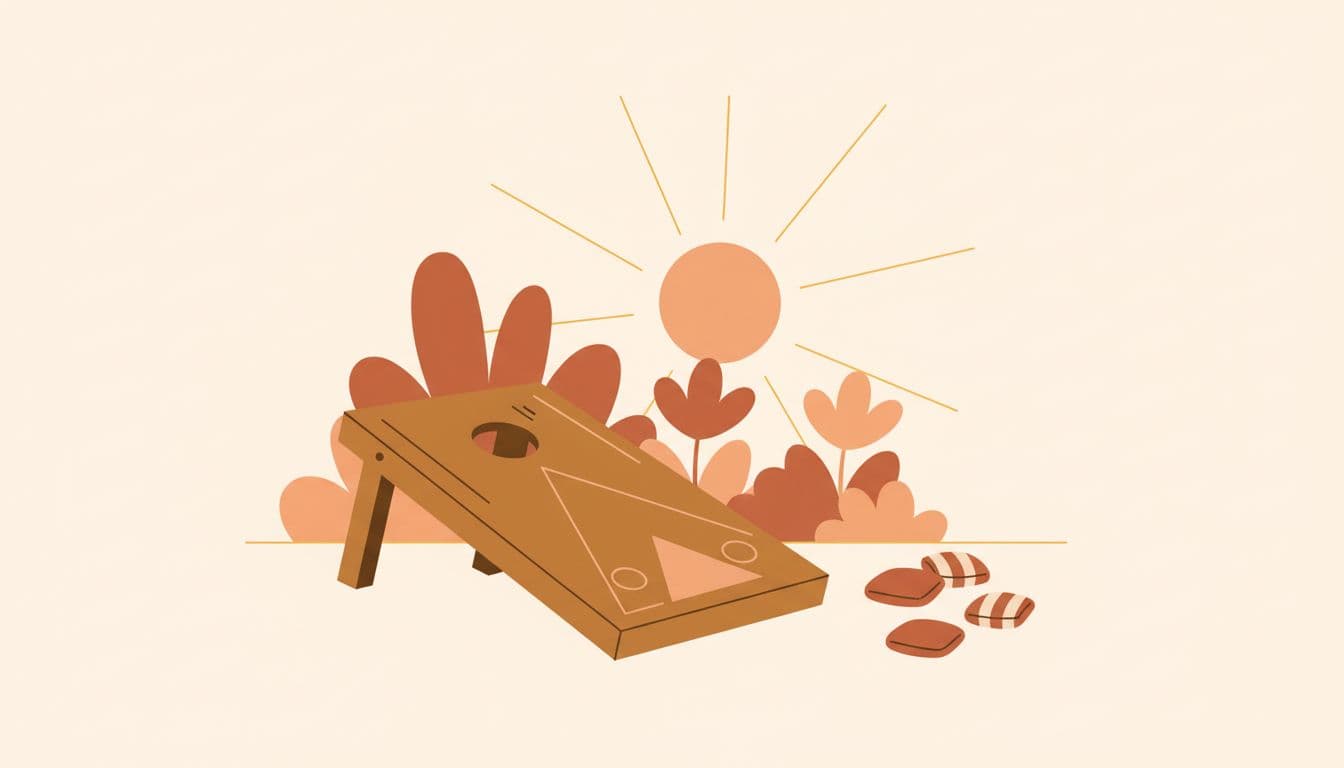
There's a popular American backyard game that shows up at barbecues, tailgates, and family cookouts all summer long. Millions of people play it. There's even a professional league. But describe it to someone from Argentina, and you'll get a blank stare.
Not because the vocabulary is hard. Not because they don't understand the words. But because the thing itself simply doesn't exist there.
And that moment — that gap between two cultures — is one of the most powerful tools you have as a Spanish learner.
Why Cultural Gaps Make Better Lessons
When you learn a word like "lanzar" (to throw) from a textbook, it sits in a list next to twenty other verbs. It's flat. It's forgettable.
But when you learn "lanzar" because someone is trying to explain a game that involves throwing small bags of corn at a wooden board with a hole in it — and the person listening has absolutely no idea what you're talking about — that's a different experience entirely. The confusion, the laughter, the back-and-forth of trying to bridge a cultural gap using only Spanish? That's where vocabulary stops being a list and starts becoming something you actually remember.
This is what happened in our latest video. A game that's second nature in the U.S. turned into a full conversation about throwing, aiming, scoring, and the surprising ways different cultures invent their own versions of backyard fun.
What Argentina Has Instead
When the clues started flying, the Argentine in the conversation immediately thought of tejo — a beach game played with flat discs in the sand. You toss one disc as the target, then everyone tries to land theirs as close as possible. It's simple, it's social, and the whole family can play.
Same energy. Same "let's go outside and throw things" spirit. Completely different game.
That's the beauty of learning through culture. You don't just learn a word — you learn that every culture has its own answer to the same human impulse. And comparing those answers gives you context that no vocabulary list ever could.
Vocabulario That Sticks
Here are the words that came up naturally during this cultural exchange. Each one earned its place in the conversation — nobody pulled out a textbook.
Lanzar — to throw. The core action in both games. Whether you're tossing a disc on an Argentine beach or aiming at a target in a U.S. backyard, this verb covers it.
Agujero — hole. This was the clue that caused the most confusion. The Argentine game has no holes. The American game revolves around one.
Bolsita — small bag. Notice the diminutive "-ita" ending — this is everywhere in Argentine Spanish and makes things sound smaller, softer, more familiar. You'll start hearing it constantly once you tune in.
Tablero — board. The playing surface. You'll also hear this word for board games (juegos de tablero) and even car dashboards.
Puntería — aim (noun). If you've got good aim, you have "buena puntería." It's a skill that matters in both games, even if the targets are completely different.
Apuntar — to aim (verb). The action version. Point, focus, throw.
The Real Lesson Here
Most Spanish courses teach you vocabulary organized by category — foods in one chapter, sports in another, travel in the next. It's tidy. It's logical. And it doesn't reflect how language actually works.
In real life, you learn words because you need them. Because someone is describing something you've never seen before and you're trying to keep up. Because you're laughing at a misunderstanding and suddenly a word clicks into place.
That's what happens when you explore the spaces between cultures. A game that doesn't translate becomes a ten-minute conversation full of real vocabulary, natural grammar, and the kind of emotional engagement that makes things stick.
Emotion first. Words second. That's not just a tagline — it's how memory actually works. Research consistently shows that vocabulary learned through emotional or narrative context is retained far longer than vocabulary learned through repetition alone.
Try It Yourself
Next time you're talking with a Spanish speaker, try describing something from your culture that might not exist in theirs. A tailgate. A potluck. A snow day. Watch what happens when you have to find the words — and when they have to find a comparison from their own experience.
That conversation will teach you more Spanish than a week of flashcards.
Want to see how this played out in real time? Watch the full episode on our YouTube channel and see if you can guess the mystery game before the answer is revealed.
¡Nos vemos!
Learn Spanish through real stories
Read 2 legends free, plus free access to our Flashcards site. No payment required to start.