Amistad: A Cultural Treasure — The Spanish You Need to Talk About Friendship
Not all friends are created equal — at least not in Spanish. Here's how to describe your inner circle (and everyone else) like a native speaker.
In English, the word "friend" does a lot of heavy lifting. Your childhood best friend? Friend. The person you nod at in the office kitchen? Also… friend. But in Spanish, there's a whole spectrum of words that capture exactly how close you are to someone — and using the right one says a lot about your relationship.
Let's break it down.
The Friendship Tree: From Acquaintances to Soul Mates
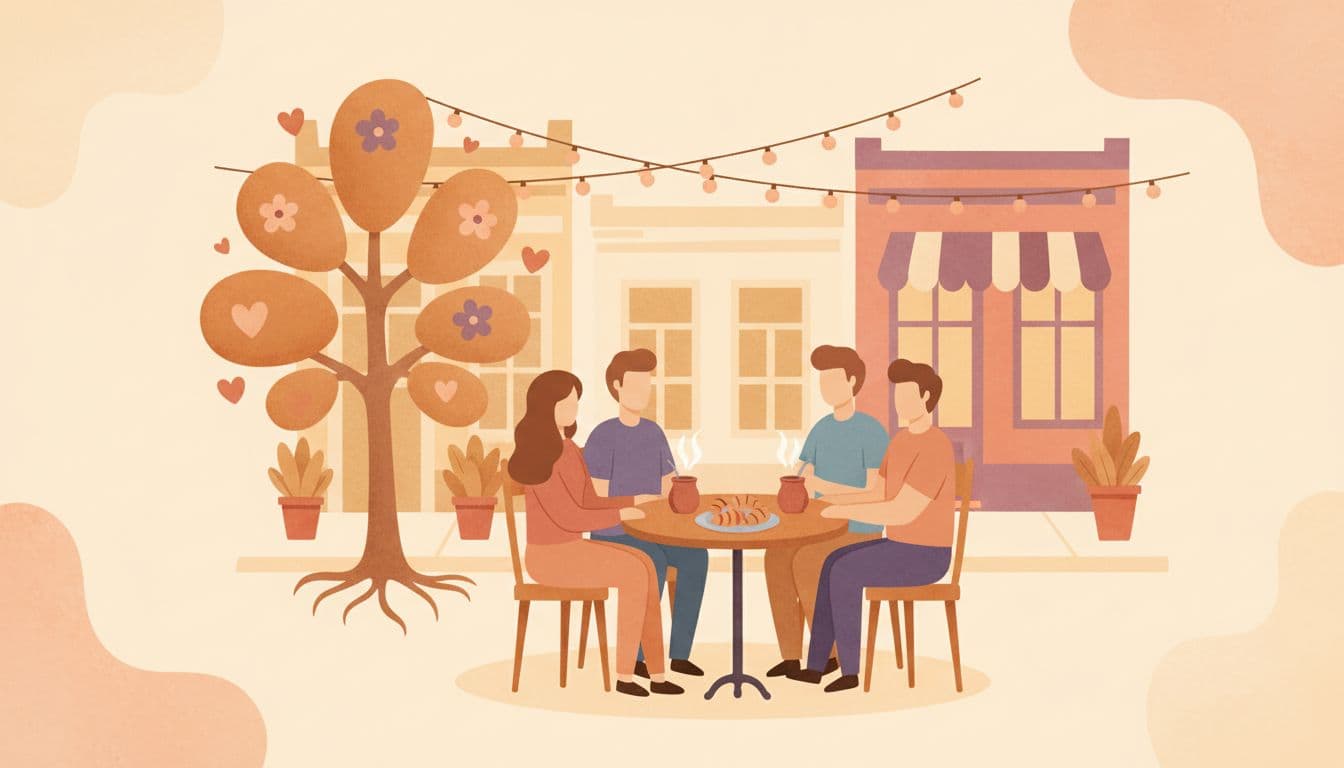
Think of your social circle as a tree. At the roots, you've got the people you barely know. At the top, surrounded by hearts and flowers? That's your amigo del alma.
Conocido — This is someone you know, but that's about it. The neighbor you wave to. The barista who remembers your order. You're not grabbing dinner together anytime soon, but you recognize each other. Think: acquaintance.
Compañero — A step up. This is your colleague, classmate, or teammate — someone you spend time with because life put you in the same place. You might also hear colega, which carries a similar vibe. You share a context (work, school, a sports league), but the friendship might not extend much beyond that.
Mejor amigo / Amigo del alma — Now we're talking. Your mejor amigo is your best friend, your ride-or-die. And amigo del alma? That literally translates to "friend of the soul." It's the person who knows your deepest secrets, finishes your sentences, and has probably seen you cry over a telenovela. This is the top of the tree.
Talking About Friendship: Key Expressions and Action Verbs
Once you know what to call your friends, you need to know how to talk about what you actually do together. Spanish is full of warm, expressive phrases for this.
Expresiones clave (key expressions) let you describe how you relate to your people. Things like llevarse bien (to get along), contar con alguien (to count on someone), or caerle bien a alguien (to hit it off with someone). These phrases pop up constantly in everyday conversation, and they'll make you sound way more natural than sticking to textbook basics.
Then there are the verbos de acción — because friendships aren't just about feelings, they're about what you do. Spanish speakers talk about compartir (sharing), apoyar (supporting), salir (going out), and disfrutar (enjoying) time together. Friendships are built on shared experiences, and the language reflects that beautifully.
La Cultura de la Amistad: Why Friendship Hits Different in Latin America
Here's where things get really interesting. In many Latin American cultures, friendship isn't just a nice-to-have — it's woven into the fabric of daily life. And understanding this cultural layer will make your Spanish feel so much more authentic.
Las Reuniones son Centrales
Gathering together is everything. Whether it's a big family asado (barbecue), a birthday fiesta, or just a casual weekend almuerzo (lunch), sharing food and celebrations is how bonds are built and maintained. In Argentina especially, the sobremesa — that long, lingering conversation after a meal — is practically sacred. Nobody's rushing to leave. The table is where connection happens.
Tradiciones que Unen
Every region has its own traditions that bring people together. From dancing cumbia at a street festival to playing fútbol in the park on Sundays, these shared cultural activities create a sense of belonging that goes beyond just "hanging out." Music, dance, food, and celebration are the glue.
Actividades Típicas con Amigos
So what do friends actually do together? Explore mercados (markets), catch live music, go hiking, share mate in the park, or simply sit in a café and talk for hours. From the mountains to the coast, the activities might change, but the idea is the same: shared experiences create lasting memories — recuerdos that stick with you.
Your Turn: Put It Into Practice
Next time you're describing a friend in Spanish, skip the generic amigo and get specific. Is that person really your amigo del alma, or more of a conocido? Try using one of these expressions in your next conversation or journal entry. You might be surprised how much more connected your Spanish feels when you match the words to the relationship.
Because in the end, la amistad es más que una palabra — friendship is more than just a word. It's a whole culture.
Want to keep learning? Join the Spanish Minds community for challenges, live Q&As with Profesora Daniela, and a whole crew of fellow learners who are on this journey with you. ¡Nos vemos allí!
Learn Spanish through real stories
Read 2 legends free, plus free access to our Flashcards site. No payment required to start.