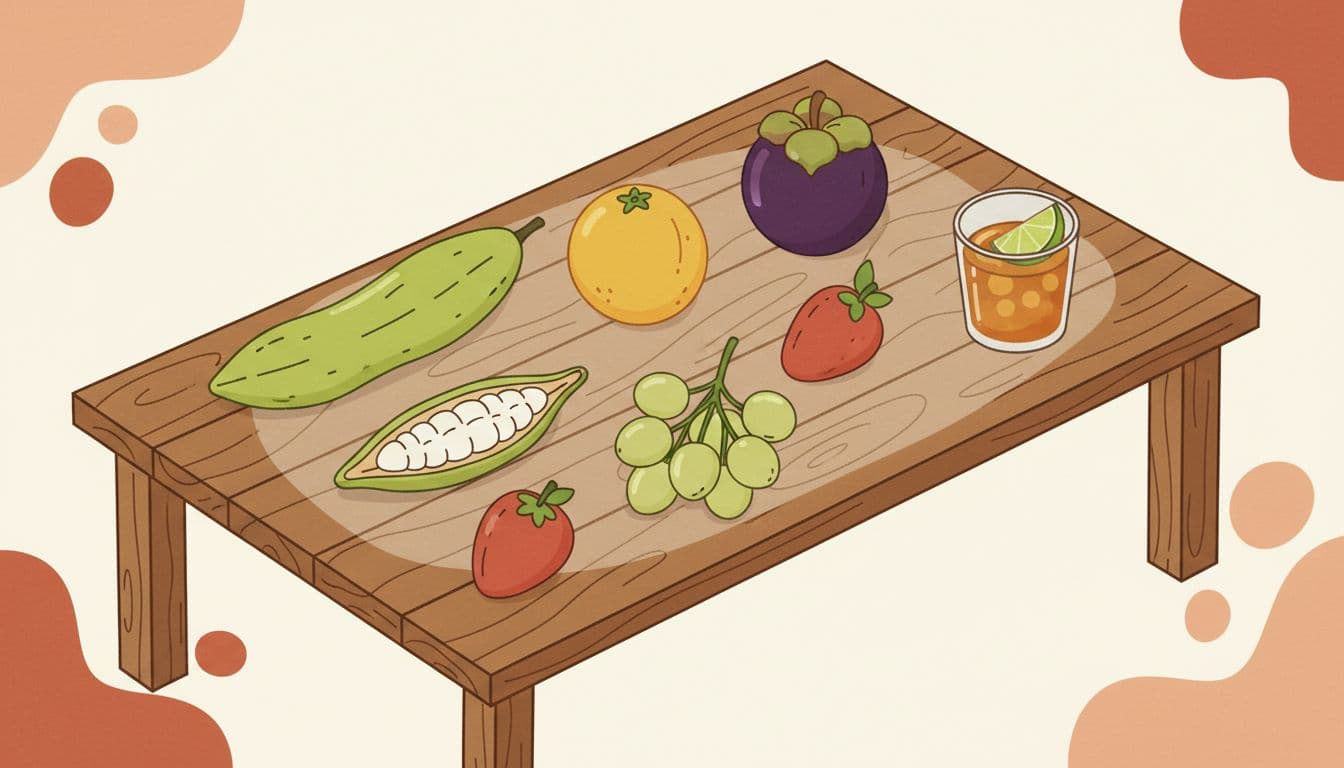
Probando las Frutas de Colombia from Galería Alameda
Profesora Nathalia takes me through one of Cali's most iconic markets — and then we eat.
If you've never been to Galería Alameda in Cali, let me try to paint the picture, color everywhere, vendedores shouting cheerful specials across the aisles, stalls piled high with fruits that don't exist in any grocery store I've ever walked into. It is a full sensory experience — and the best possible Spanish classroom.
That's where Profesora Nathalia took me first.
Nathalia is caleña — born and raised in Cali — and she knows la Alameda the way you know your own neighborhood. She walked me through the stalls, pointed out fruits I'd never seen, explained which ones are dulces, which are ácidas, which will manchar tu ropa if you're not careful, and which ones you absolutely have to try before leaving Colombia.
Then we brought the whole haul back, set them out on the table, and did what any curious learner would do. We tasted every single one.
Here's a little preview of what ended up on the table — and why you'll want to watch the full episode.
Guama
Imagine biting into something that tastes like sweet, airy algodón de azúcar — cotton candy, but growing inside a long green pod. Suave, dulce, and honestly kind of magical. Nathalia had a very firm warning about the semillas. Trust her on that one.
Granadilla
The aroma hits you before the flavor does. Pequeña, dulce, muy única. You don't chew the seeds — you let them slide, membrana and all. It's a whole little ritual and I was not prepared.
Madroño
Dulce, pero más ácida. This one made my face do things I wasn't planning. Nathalia explained why el madroño is hard to find and almost always eaten on its own — and after tasting it, I understand.
Mangostino
Probably the visual highlight of the day. You crack through a thick, oscura cáscara and inside are little white segments that look exactly like ajos — garlic cloves. But soft. Sweet. Melt-in-your-mouth.
Grosellas
Bright, tiny, and ácidas on another level — traditionally eaten here con limón y sal. Did I survive the first bite? You'll have to watch and see.
…y una sorpresa al final
We closed the tasting with a preparation I'd never heard of: something slow-simmered in almíbar for hours until the cáscara turns suave, dulce, and completely unexpected. I won't spoil which fruit — but I'm already dreaming about it con helado de vainilla.
Why the Market Is the Classroom
This is exactly the kind of Spanish learning we love at Spanish Minds — no flashcards, no drill-and-repeat. Just a real market, a real guide, and real moments of "wait, what is this?"
Every fruit carried its own little lesson: textura, semilla, cáscara, mancha, amargo, dulce, ácido, almíbar. These are the words you actually remember — because you tasted them, in the market where they're sold, with someone who grew up eating them.
Watch the Full Taste Test
→ Watch on YouTube: youtu.be/kT9Sb-tNbW4
Your Spanish, Your Journey — y hoy, your taste buds también.
Learn Spanish through real stories
Read 2 legends free, plus free access to our Flashcards site. No payment required to start.